
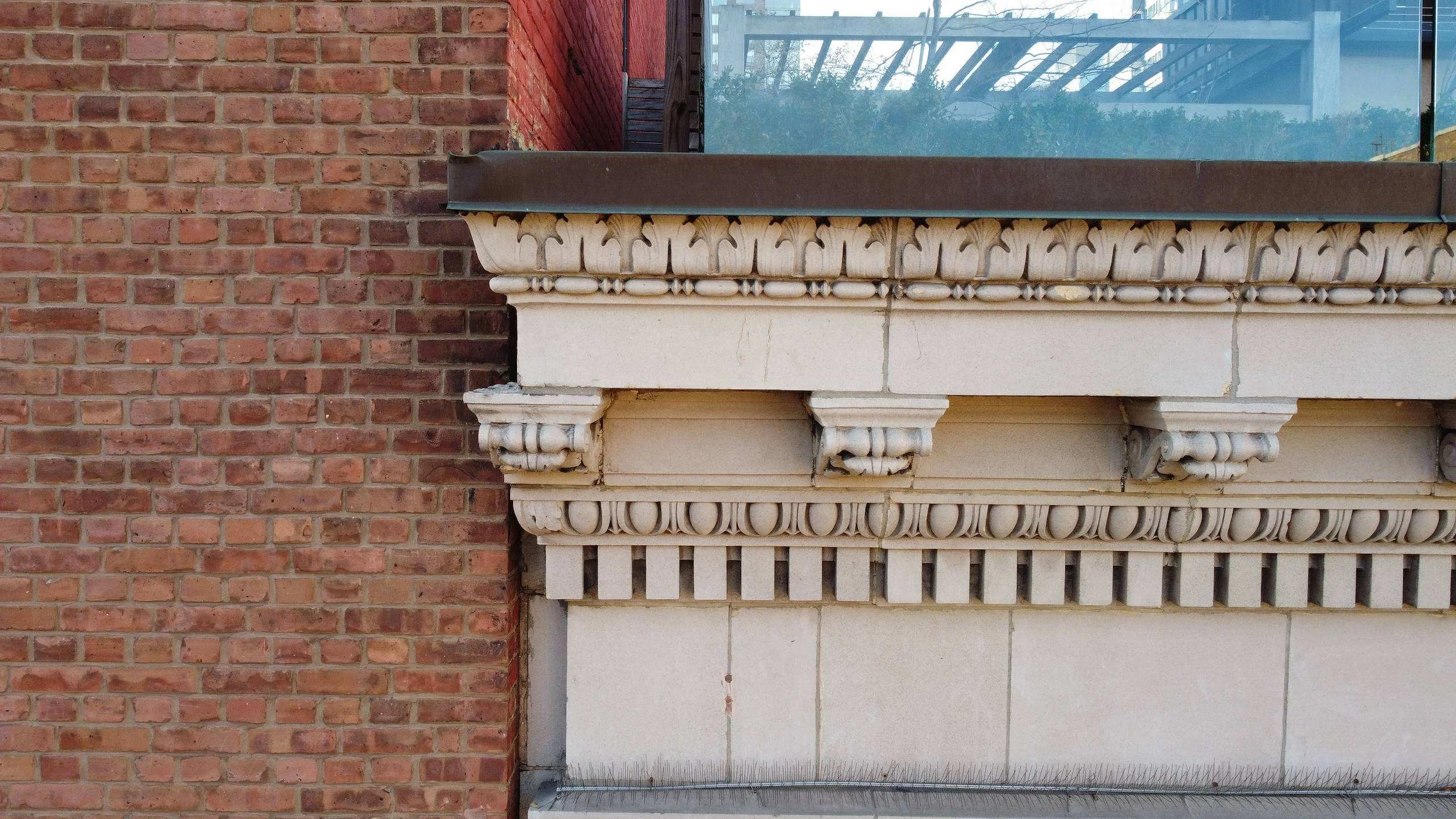
The short answer: if your New York City building has a parapet along a street or other public right-of-way, it needs a parapet observation every year, done by December 31. The report stays with the owner for at least six years. Nothing is filed with the Department of Buildings unless something unsafe turns up.
December 31 is the deadline for this year’s parapet observation in New York City. If your building has a parapet facing the street, the observation has to be done and the report kept by the owner by then. We started Dronegrafix as building owners and board members who went through NYC façade inspections ourselves, so this is a date we keep an eye on.
The requirement comes from Local Law 126 of 2021 (NYC Administrative Code §28-301.1.1) and the Department of Buildings rule 1 RCNY 103-15.
Does your building need one?
Probably, if it has a parapet fronting a public right-of-way. Height doesn’t matter. A parapet is simply the part of a wall that rises above the roof line, and if a cornice is attached to that wall, it gets checked too. A cornice with no parapet behind it isn’t covered.
Detached one- and two-family homes are exempt. So are buildings with a fence or other barrier that keeps people away from the wall. DOB’s FAQ reads that as a barrier set back more than half the wall’s height. If you’re not sure yours qualifies, ask DOB.
What you file (almost nothing)
You don’t file the report with the Department of Buildings. It stays with the owner, who has to keep it for at least six years and hand it over if the Department asks for it. The exception is an unsafe condition, which gets reported right away. More on that below.
Who can do it
It doesn’t have to be an engineer. The rule names a bricklayer, super, handyman, mason, architect, engineer or an inspector from a New York State-authorized insurance company, among others. Basically, anyone competent to spot a hazard on a parapet. They have to get close to the whole parapet, and the city says a fire escape or the roof is fine for that.
They’re checking three things:
Is the parapet plumb, within an eighth of its thickness?
Is it deteriorating? Think cracks, loose or missing bricks and coping stones, deteriorated mortar joints, spalling or rot.
Is anything attached to it, like railings, ladders, signs or telecom gear, still secure?
What goes in the report
The address, the owner, who did the observation and when, a plan showing where the parapets are, how they’re built, what was found, any repairs since the previous report, and dated photos. The rule lists dated photos taken at the time of observation. The FAQ says photos aren’t required. The safe move is to include them.
If something is unsafe
The person who found it calls 311 and emails parapets@buildings.nyc.gov right away. The owner has to put up protection immediately, like a sidewalk shed, fencing or netting, and keep it up until the problem is fixed. The fix is due within 90 days of the notice to DOB. The city says there are no extensions. Buildings under FISP also file a FISP3 Unsafe Notification.
Where we come in
A drone doesn’t replace the close-up observation, and we won’t tell you it does. What it gives you is extra dated photos of your street-facing parapets and cornices. They don’t stand in for the photos taken during the observation, and they don’t count as the observation. Next year you’ll have something to compare against.
If you have a street-facing parapet and nothing booked yet, there are about five weeks left as of November 25. See how our parapet inspections work, or request a quote.
Sources: NYC Department of Buildings, Parapets, Parapet FAQs and 1 RCNY 103-15, read November 25, 2026.
